What's the Point of a Website in 2026?
Do you need a website in 2026? Yes. Your website is your best employee: it works 24/7, never calls in sick, and scales infinitely.
I get asked this more than you'd think. Usually by someone who's been running their business off Instagram and WhatsApp for years and genuinely doesn't see why they'd spend money on a website.
"Everyone's on social media now. Nobody Googles things anymore."
Except they do. Every single day. And if you're not there when they search, someone else is.
Your Best Employee
Think of your website as a member of staff. Except this one works 24 hours a day, 7 days a week, never takes a sick day, never asks for a raise, and can serve a thousand customers simultaneously.
At 2am on a Sunday, when someone in Brighton is lying in bed searching "plumber emergency near me" or "tattoo studio walk-ins" or "landscaper Hove" — your website is the one answering the door. Instagram is asleep. Your phone is off. But your website is there, showing your work, explaining your services, and giving them a way to book or get in touch.
No other asset in your business does this. Not your shopfront, not your van signage, not your business card. Your website is the only thing that's always on.
The Instagram Trap
Instagram is rented land. You don't own your audience, your content, or your reach. Meta changes the algorithm and your engagement drops 40% overnight. It's happened before. It'll happen again.
I've seen businesses in Sussex with 10,000 Instagram followers who can't reliably get 200 people to see a post. That's a 2% reach rate. On your own website, 100% of visitors see 100% of what you put in front of them.
More importantly, Instagram is for browsing. Google is for buying. The person searching "restaurant near me Brighton" has their wallet out. The person scrolling Instagram at lunch is killing time. Both matter — but if you had to choose, you'd choose the one who's ready to spend.
What a Website Actually Does
Let's be specific about what a good website does that social media can't:
1. It ranks on Google. When someone searches for what you sell, in the place you sell it, your website can appear. Your Instagram profile might show up too — buried on page two, with no control over what they see first.
2. It tells your full story. On Instagram, you get a grid and a 150-character bio. On your website, you control the entire narrative: who you are, what you do, what makes you different, what your customers say about you, and exactly how to get started.
3. It captures leads while you sleep. A contact form, a booking system, a quote request — these things work without you. I built Jo Fitness a booking and payment system integrated directly into her site. She went from chasing DMs to having sessions booked and paid for automatically.
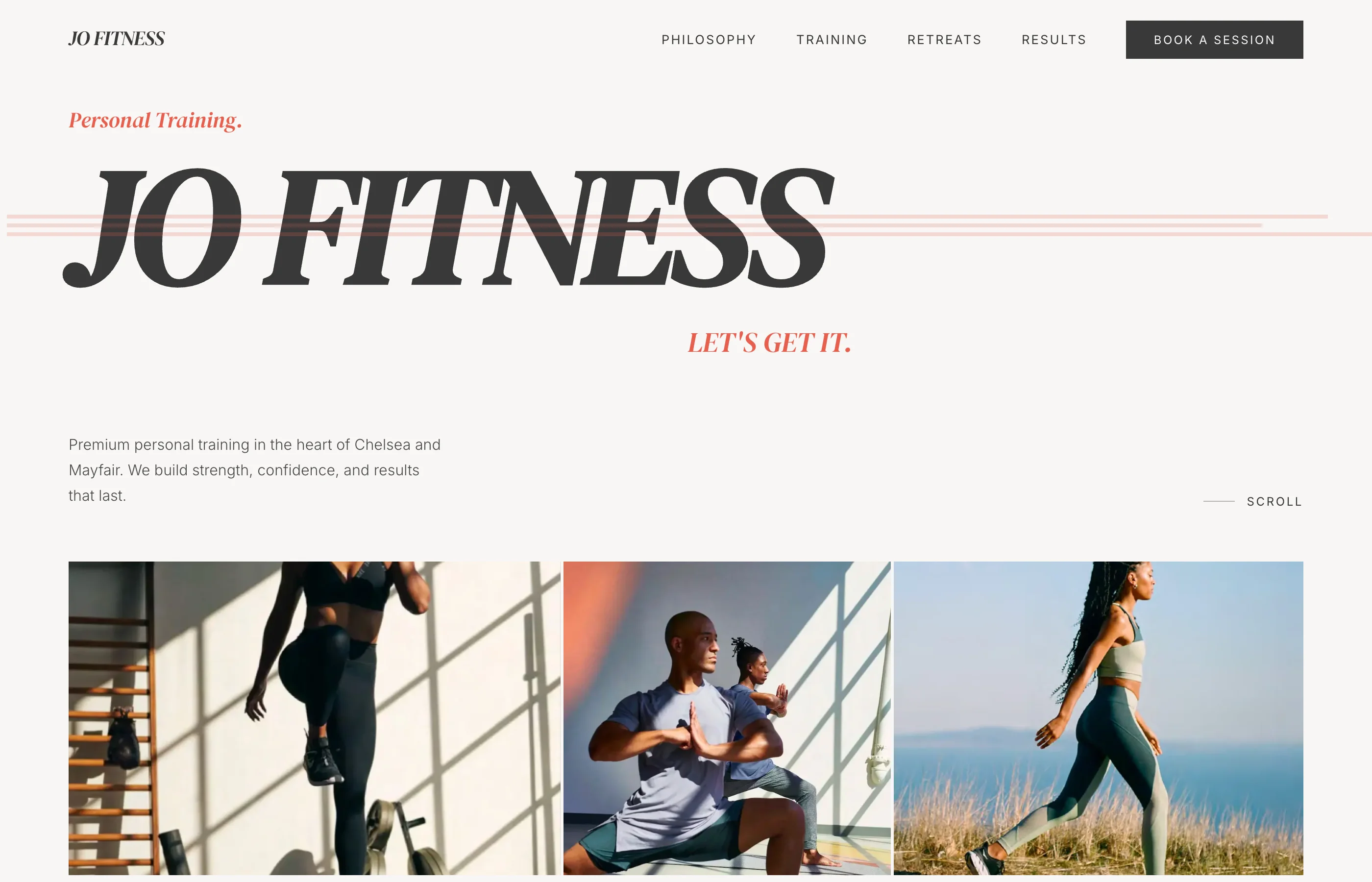
4. It builds trust instantly. People are sceptical, and they should be. A professional website with real photos, real testimonials, and clear pricing signals legitimacy in a way that a social media page simply can't match. This is especially true for trades — a construction company or loft converter asking someone to spend five or six figures needs to look established.
5. It's yours. You own it. Nobody can take it away. No algorithm change, no platform policy update, no corporate acquisition can remove your website from the internet. Try saying that about TikTok.
"But My Competitors Don't Have Websites Either"
Good. That's your advantage.
In most local markets, the bar is shockingly low. Search for almost any trade or service in Brighton and half the results on the first page are directories — Checkatrade, Yell, Bark. The businesses that do have websites often have terrible ones: slow, outdated, built on a free Wix template in 2019.
If you have a fast, well-designed website with clear services, real photos, and a way to get in touch, you will outrank businesses that have been around longer than you. Google rewards quality. Most of your competitors aren't providing it.
I've seen this happen repeatedly across Sussex. Coastal Tiling had no website at all — just word of mouth. We built one, and they started getting inbound enquiries from Google within weeks.

The ROI Question
A website costs money. I won't pretend otherwise. But consider the maths.
A local business website typically costs between £1,500 and £5,000. Let's say yours costs £3,000. If your average customer is worth £500, you need six new customers from the website to break even. Six customers. In the entire life of the website.
Most businesses I've built sites for recoup the cost within three months. After that, it's pure margin. The website doesn't get more expensive as it brings in more leads. It scales for free.
Compare that to paying for ads on Google or Facebook — £500-£1,000 per month, every month, forever. The moment you stop paying, the leads stop coming. A website is an asset. Ads are an expense.
When You Don't Need a Website
I'll be honest — there are a few situations where a website isn't essential:
- You're at capacity and don't want more work. If your calendar is fully booked through referrals alone, a website won't help you do more. It might help you charge more, though.
- You're purely B2B in a tiny niche. If you have five clients and they all came through personal connections, a website is a nice-to-have, not a need-to-have.
- You're testing a business idea. Don't build a website for something that might not exist in six months. Start with social media, validate the idea, then build properly.
For everyone else — every restaurant, salon, tradesperson, studio, gym, agency, consultant, and shop in Brighton and beyond — a website isn't optional. It's infrastructure.
The Bottom Line
A website in 2026 is not a luxury. It's not a vanity project. It's the most cost-effective employee you'll ever hire.
It works while you sleep, sells while you're on holiday, and builds your reputation with every visitor. It's the one thing in your business that gets better over time as Google learns to trust it and customers learn to find it.
If you're running a business without one, you're leaving money on the table every single day.
If you want to talk about what a website could do for your business, book a call.
Your website doesn't take weekends off. Why should your marketing?