How Much Does a Custom Website Cost in the UK?
Website costs in the UK range from £500 to £50,000+. Here's an honest breakdown of web design prices, what affects cost, and what you actually need.
The honest answer: it depends. But I know that's useless, so let me actually break it down.
I've been building websites in Brighton for years. I've quoted projects from £1,500 to well over £10,000. The price varies because the work varies. But the conversation about pricing in this industry is terrible — full of vague ranges and hand-waving. Let me try to be genuinely transparent.
The Spectrum
Here's what you get at each price point in the UK market in 2026:
£0-£500: DIY / Template
You're using Wix, Squarespace, or a free WordPress theme. You're doing the work yourself — choosing a template, adding your content, figuring out the settings.
What you get: A functional website that looks like a template. Limited customisation. Adequate for a personal blog or a very early-stage side project.
What you don't get: Anything unique, any SEO advantage, any real design thinking, or anyone to call when something breaks.
£500-£2,000: Freelancer / Basic Custom
You're hiring someone — usually a freelancer — to build a site with a pre-made theme or basic custom design. Typically 3-5 pages. A homepage, about, services, contact.
What you get: A clean, professional-looking site. Someone else handles the tech. Basic SEO setup. Mobile-responsive design.
What you don't get: Deep strategy, custom functionality, content writing, ongoing support (usually).
£2,000-£5,000: Custom Design + Development
This is where most small businesses should be. A fully custom-designed website, hand-coded or built on a modern framework, with proper SEO, original copy, and a design that's built around your specific business.
What you get: A site that looks and works like your business, not a template with your logo swapped in. Usually includes content strategy, copywriting, responsive design, performance optimisation, and basic SEO.
What you don't get: Complex functionality like e-commerce, booking systems, client portals, or CMS dashboards (unless the developer is generous — or fast).
£5,000-£15,000: Custom + Functionality
Now we're adding systems. Online booking, payment processing, CMS for managing content, lead capture with notifications, portfolio management, integrations with third-party tools.
This is the range for businesses that need their website to do things, not just look good. A salon with online booking. A construction company with a project portfolio CMS. A personal trainer with session booking and recurring payments.
£15,000+: Complex Web Applications
Multi-user platforms, complex e-commerce, admin dashboards, custom APIs, business automation. This is software development, not web design.
What Actually Drives the Cost
The page count matters far less than people think. A five-page website can cost more than a twenty-page one if the five pages require custom functionality, complex design, and integration work.
The real cost drivers are:
1. Custom design vs. template adaptation. Designing from scratch takes longer than modifying a theme. But the result is incomparably better. Every pixel serves your business, not a template's assumptions about what businesses need.
2. Functionality. A contact form costs almost nothing. A booking system with calendar integration, payment processing, and email notifications costs real development time. The more your website needs to do, the more it costs.
3. Content. Most businesses don't have website-ready content. Writing clear, compelling copy for every page takes time and skill. Many web developers (myself included) include copywriting in the price. If they don't, you'll need to write it yourself or hire a copywriter separately.
4. SEO foundation. Proper technical SEO — structured data, meta tags, semantic HTML, page speed optimisation, local business markup — takes expertise. Some developers include it; many don't. If they don't, you'll pay an SEO agency £500-£1,000/month later to do what should have been built in from the start.
5. Ongoing maintenance. Some quotes include a year of hosting and support. Others don't. Make sure you know what happens after launch.
The Value Question
Cost is the wrong frame. The right question is: what's the return?
I built Brighton Damp Proofers a comprehensive website with service pages targeting every type of damp problem across thirteen areas in Sussex. The site cost a fraction of what a single major damp job is worth. Within weeks, they were getting inbound enquiries from Google — people who'd never heard of them before.
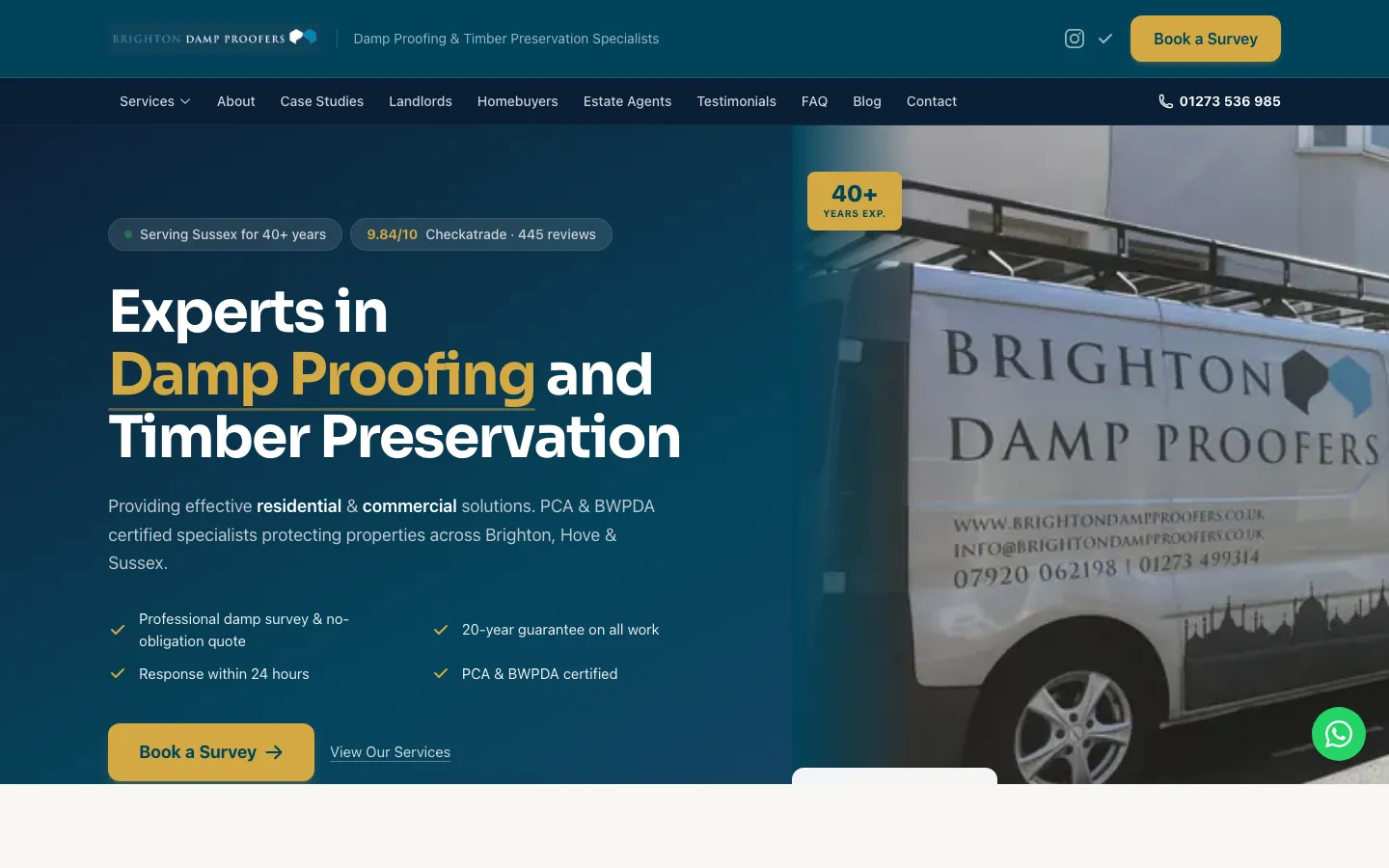
For a business where the average job is worth £2,000-£10,000, the website pays for itself almost immediately. The ongoing return compounds — the site keeps ranking, keeps generating enquiries, keeps converting visitors into customers. The cost is one-time. The return is indefinite.
Template vs. Custom: The Real Comparison
A Squarespace site costs £12-£33/month. Over three years, that's £432-£1,188. Plus your time building and maintaining it. Plus the plugins you'll need (forms, booking, analytics). Plus the SEO limitations you'll fight against.
A custom site costs more upfront but:
- No monthly platform fees
- No plugin subscriptions
- No performance tax from loading unnecessary code
- No design limitations from template constraints
- Full ownership — you're not renting
Over a three-to-five year period, the total cost of ownership is often comparable. The difference is that the custom site performs better, looks better, and makes you more money throughout.
Red Flags in Quotes
Watch out for:
No breakdown. If someone quotes "£3,000 for a website" with no line items, ask what's included. Design? Development? Content? SEO? Hosting? Support?
Unrealistic timelines. A proper custom website takes 2-4 weeks minimum. If someone promises a custom site in 3 days, they're using a template.
No mention of performance. If speed, mobile responsiveness, and SEO aren't discussed in the proposal, they're not prioritising them.
Proprietary lock-in. Some agencies build on proprietary platforms so you can't leave without rebuilding. Ask: "If we part ways, do I own the code?" The answer should always be yes.
Monthly fees for basic hosting. If someone charges £100+/month for "website management" and all they do is keep the lights on, you're overpaying. Hosting a static or simple site costs £5-£20/month. The rest should be genuine maintenance work.
What I Charge
I'll be direct. Most of my projects for small businesses in Brighton and Sussex fall in the £2,000-£5,000 range. That includes design, development, copywriting, SEO, and deployment. Projects with booking systems, CMS dashboards, or complex functionality go higher.
I don't do monthly retainers unless there's genuine ongoing work. I don't charge for hosting if it's simple. I don't lock anyone into proprietary platforms — you get the code, you own it, you can take it anywhere.
If you want to have a straight conversation about what your business needs and what it'll cost, book a call. No pitch, just honesty.
A good website isn't an expense. It's the cheapest salesperson you'll ever hire.