How Salons and Restaurants Are Burning Cash Without Online Booking
Salons and restaurants lose thousands each year without online booking. Here's how manual booking via DM and phone costs more than you think.
Every salon owner I've spoken to in Brighton has the same routine. The phone rings during a cut. They put the scissors down, apologise to the client, grab the phone, flip through a paper diary or scroll through their calendar app, try to find a slot, read it back, confirm, hang up, pick the scissors back up.
That interruption just cost them five minutes, broke their flow, and annoyed the client in the chair. Multiply that by fifteen calls a day. That's over an hour of lost productivity — every single day — just handling bookings.
For restaurants, it's worse. A busy Friday night, the phone rings constantly. The host is torn between seating walk-ins and answering calls. They miss three calls. Those three calls go to the restaurant down the road that has online booking. That's three tables — maybe £400-£600 in revenue — gone.
The DM Problem
The newer generation of businesses — especially salons, beauty studios, and personal trainers — have moved bookings to Instagram DMs. This feels modern. It's not.
DMs are worse than phone calls for booking because:
1. Response time is unpredictable. A customer DMs at 10pm. You see it at 8am. They've already booked somewhere else.
2. Conversations get buried. Between story replies, spam, and collaboration requests, booking DMs get lost. I've spoken to salon owners who found booking requests they'd missed entirely — days later.
3. There's no calendar integration. You're manually checking availability, manually typing responses, manually adding to your diary. Every step is a chance for error. Double bookings happen. Slots get forgotten.
4. You can't take deposits. No-shows are the biggest profit killer in the salon industry. UK data suggests the average salon loses £2,000-£5,000 per year to no-shows. Without online booking, you can't take a deposit to protect yourself.
What Online Booking Actually Looks Like
It's not complicated. A booking system on your website means:
- Customer visits your site at any hour
- They see available slots in real-time
- They choose a service, pick a time, and book
- They pay a deposit (or the full amount) immediately
- You get a notification. Your calendar updates automatically
- The customer gets a confirmation email with details
No phone call. No DM. No diary juggling. The entire transaction happens without you lifting a finger.
I built this exact system for Jo Fitness — a personal trainer working out of Chelsea and Mayfair. She was managing everything through Instagram DMs and manual bank transfers. Sessions got double-booked. Payments were late. Follow-ups fell through the cracks.
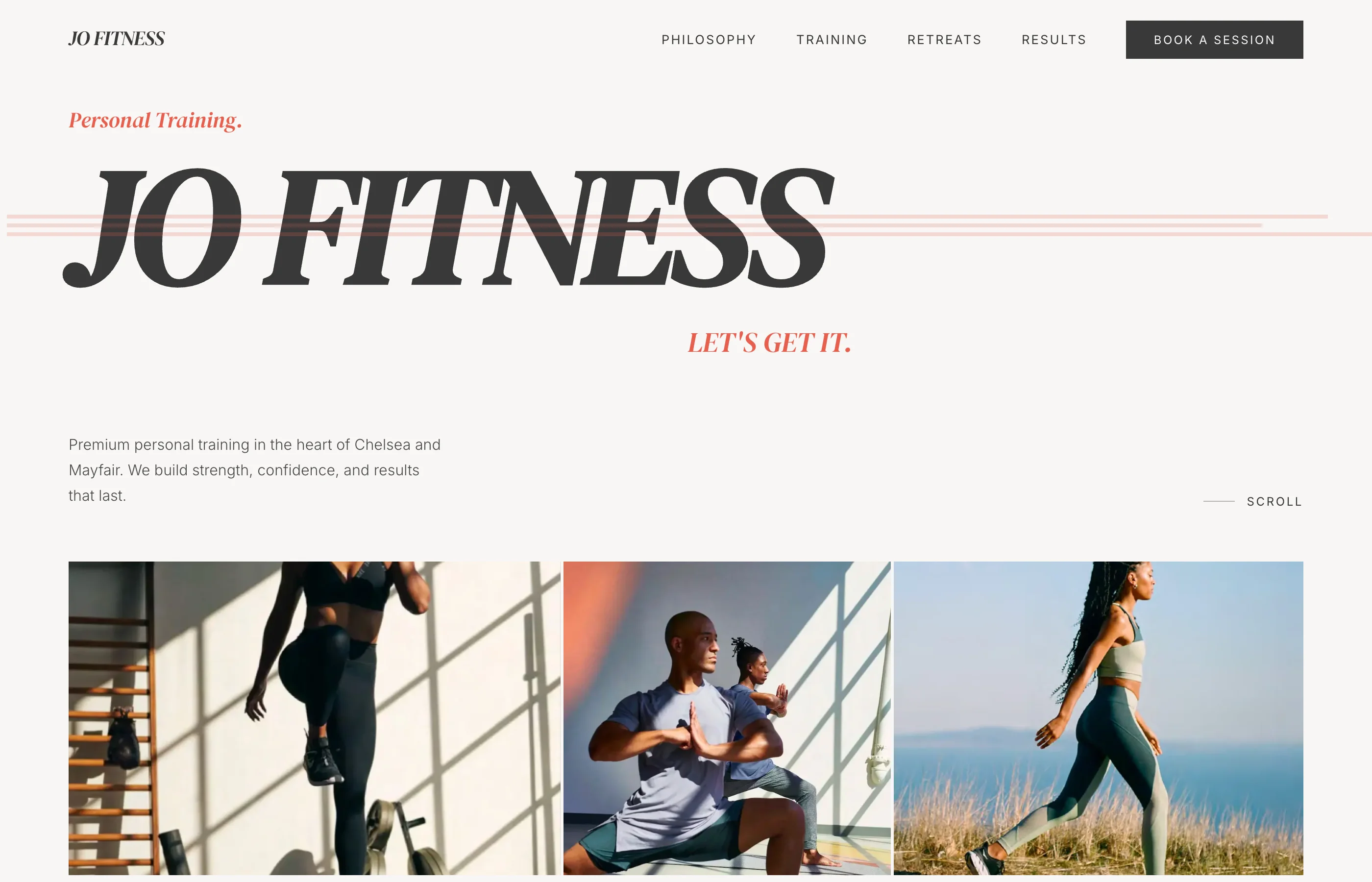
We built her a site with Google Calendar integration and GoCardless for recurring payments. Now clients book directly from the website, sessions sync to her calendar automatically, and payments land in her account without a single chase-up message.
She told me the system saved her roughly two hours a day that she was spending on admin. Two hours a day, five days a week. That's ten hours of her life back — every week.
The Real Cost of Not Having It
Let's do the maths for a Brighton salon with three stylists:
- Missed calls: 3 per day x £60 average booking = £180/day lost
- No-shows: 2 per week x £60 = £120/week lost
- Admin time: 1 hour/day at £15/hr equivalent = £75/week lost
- Late-night enquiries lost to competitors: Conservatively 5/week x £60 = £300/week
That's roughly £1,600 per week in lost or leaked revenue. Over a year, that's north of £80,000. Even if you halve those numbers for being conservative, you're still looking at £40,000 per year.
A booking system costs a fraction of that. A proper website with integrated booking costs a few thousand to build and maybe £20-£50/month to run. The ROI isn't marginal — it's absurd.
Restaurants Have It Even Worse
A restaurant that relies on phone bookings during service is actively hostile to its own staff. The host shouldn't be answering phones while managing a dining room. The chef shouldn't be interrupted during prep. The owner shouldn't be taking bookings at midnight.
Online booking fixes all of this. Platforms like ResDiary and OpenTable exist, but they take a commission on every cover. A booking system built into your own website costs nothing per booking. You own the customer data. You control the experience.
For Brighton restaurants — especially during the summer tourist season when footfall triples — not having online booking is leaving thousands on the table. A visitor walking along the seafront at 3pm, trying to book dinner for 8pm, will pick the restaurant they can book immediately over the one that says "call to reserve."
Every single time.
What Stops People
"My regulars just text me." Great. Your regulars aren't the problem. It's the new customers — the ones who don't have your number, who found you on Google, who are comparing three options right now. They're the ones you're losing.
"Booking systems are expensive." They don't have to be. A simple integration with Google Calendar or Cal.com is cheap. You don't need a £500/month enterprise solution. You need something that shows your availability and lets people book.
"I like the personal touch." Keep it. Send a personal follow-up after the booking. Call to confirm if you want. But let the initial booking happen without friction. The personal touch comes during the service, not during the scheduling.
"I don't have a website." Then you need two things, not one. A website and a booking system. I've built both for businesses across Brighton and Sussex in a matter of days. It's not the project you think it is.
The Competitive Reality
In Brighton alone, I can count at least twenty salons and thirty restaurants that still don't have proper online booking. That's an opportunity for every one of them — and a competitive threat from the ones that do.
The businesses that make it easy to book will win. Not because they're better at their craft, but because they're easier to become a customer of. In a crowded market like Brighton, convenience is the tiebreaker.
If this sounds like your business, book a call and let's fix it.
The best time to add online booking was last year. The second best time is now.